
A recent study at the University of Padua finds that the winged-lion in St. Mark’s Square – the emblem of medieval Venetian statehood – was once a Tang Dynasty tomb guardian.
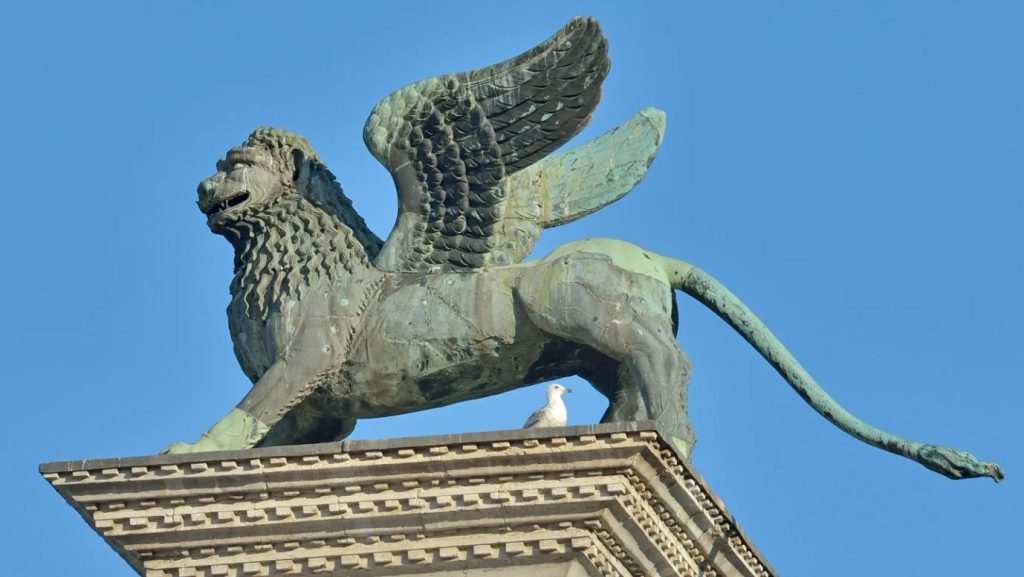
Massimo Vidale and colleagues found that the lead isotopes in metal samples from the Venetian lion closely match the lead composition of copper ore deposits in China’s Lower Yangtze River basin. It was transported to Venice along one of the many routes to Venice on the Silk Road, arriving in the mid 13th Century.
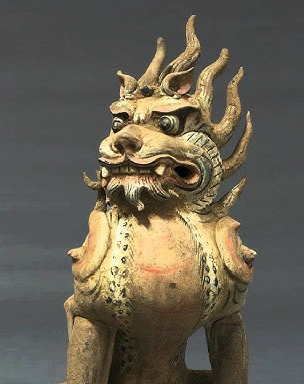
China’s Tang Dynasty ruled from the early 7th Century to the early 10th Century. During their reign, lion statues – often with horns and flaming manes – were placed near tombs as guardians of the deceased to ward off evil spirits. Researchers found evidence that the Venetian lion’s horns had been removed to more closely resemble Venice’s state icon.
Lacking it own lions, the Chinese were probably introduced to lions from India with the spread of Buddhism in the 1st or 2nd Century. Its is possible, however, that the introduction of lions into China came a bit earlier with the Achaemenid Persians, whose empire reached all the way to Tajikistan in 500 BCE.
Either way, lions were quickly revered and incorporated into Chinese culture as symbols of majesty and power, guarding temples and later tombs (like the tomb guardian pictured above) from malevolent forces.
For more about Asian lion symbolism, please see my post Shizi, Singh, Gangs Sengemo – A Lion by Any Other Name. The study that this post is based on can be found in Antiquity magazine.
Words by Laura Kelley, Photos from Wikimedia.